Non-Vintage vs Vintage Champagne: What Is the Difference?
On a champagne label, a year is not just a detail. A champagne that shows a year is a vintage champagne; one that does not is called non-vintage, often abbreviated as NV. The two categories are made in different ways, for different purposes, and they offer different experiences in the glass. Here is what you need to know.
What is non-vintage champagne?
Non-vintage champagne is made by blending wines from several harvests. Alongside the wines of the latest year, the cellar master adds reserve wines, kept from previous vintages. Champagne has a cool, variable climate, and the quality and character of each harvest can vary a lot. Reserve wines allow a house to smooth out these differences and to produce a champagne whose style remains consistent from one release to the next.
Non-vintage champagne represents the large majority of champagne produced. It is the true expression of a house style, which is why it is often considered the signature of a producer.
Ageing rules for non-vintage champagne
The appellation rules require non-vintage champagne to age for at least 15 months in the producer’s cellar before release, including at least 12 months on the lees. Many producers go well beyond this minimum. Several of our cuvées, such as the Cuvée du Fondateur Brut, the Cuvée Blanc de Blancs and the Cuvée Brut Rosé, rest for a minimum of 15 months on their lees, with 18 to 24 months of ageing on average.
What is vintage champagne?
A vintage champagne (millésime in French) is made only from grapes harvested in a single year, which is shown on the label. Producers do not make a vintage every year. They usually declare one when the harvest is of exceptional quality and has a character worth preserving on its own, without blending with other years.
Ageing rules for vintage champagne
Vintage champagne must age for at least three years in the cellar before release. In practice, many are aged much longer, sometimes for many years, to develop depth and complexity.
How reserve wines are kept
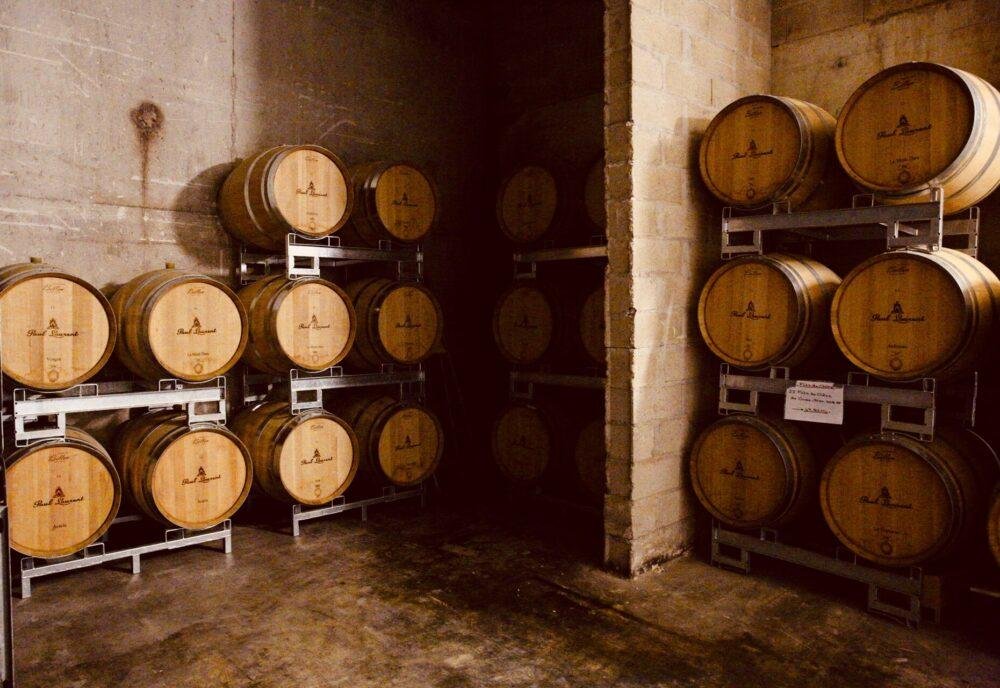
Reserve wines are the secret ingredient of many non-vintage champagnes. They are still wines from previous harvests, kept by the producer in stainless steel tanks, in oak barrels or casks, or sometimes in bottles. Some houses keep them separately by year and by plot; others maintain a “perpetual reserve”, a blend that is topped up with wine from each new harvest, so that it carries a little of every year it has known. The proportion of reserve wine used in a blend varies from house to house and from year to year. It brings maturity, roundness and continuity to the final champagne.
Key differences at a glance
| Non-vintage (NV) | Vintage | |
|---|---|---|
| Grapes | Blend of several harvests, including reserve wines | Single harvest year |
| Label | No year | Year shown |
| Minimum ageing | 15 months (12 on the lees) | 3 years |
| Style | Consistent house style, fresh and approachable | Expression of a specific year, often more complex |
| Production | Every year | Only in selected years |
| Best enjoyed | Within a few years of purchase | Often has longer ageing potential |
Long ageing on the lees: the third way
A champagne does not need to be vintage to have spent a long time in the cellar. Time on the lees is one of the main sources of complexity, bringing brioche, toast, hazelnut and a finer, creamier mousse. Some non-vintage cuvées age far longer than the minimum. Our Cuvée L’Essentiel ages for three years, the Cuvée Prestige Brut matures two years on the lees, and our Cuvée Génération Brut Nature spends a minimum of seven years on its lees, eight years on average. Learn how the lees work in how champagne is made.
How do they taste?
Non-vintage
Typically fresh, lively and balanced, with fruit to the fore and a recognisable house character. It is the ideal champagne for an aperitif, for celebrations and for a wide range of dishes.
Vintage
More individual, reflecting the weather of its year: a warm year may give richer, riper wines, a cooler year more tension. With age, vintage champagnes develop deeper aromas such as honey, dried fruit, toasted nuts and mushroom, and a more vinous texture.
Which one should you choose?
- For a party or an aperitif: a non-vintage Brut or Blanc de Blancs.
- To discover a producer’s style: start with the non-vintage, the signature of the house.
- For a gastronomic dinner: a vintage or a long-aged cuvée, served a little warmer in a wider glass.
- For a gift or an anniversary: a vintage from a meaningful year can be a lovely gesture.
Storing non-vintage and vintage champagne
Non-vintage champagnes are ready to drink when released and are generally best within a few years, while their fruit is fresh. Vintage champagnes from good producers can often be kept longer, provided they are stored lying down in a cool, dark and stable place. Read our full guide on how to store champagne.
Other label terms worth knowing
Besides the vintage, the label tells you the sweetness level (Brut, Extra Brut, Brut Nature, Demi-Sec), explained in our guide to champagne sweetness levels, and sometimes the grapes used, such as Blanc de Blancs or Blanc de Noirs. Some producers also print the disgorgement date, which helps you know how long the wine has been resting since its lees were removed.
Frequently asked questions
Is vintage champagne always better than non-vintage?
Not necessarily. They are different expressions. A well-made non-vintage champagne can be just as enjoyable, and often more versatile, than a vintage.
What does “NV” mean on a champagne bottle?
NV stands for non-vintage: the champagne is a blend of wines from several years.
Why is vintage champagne more expensive?
It is produced only in selected years, in smaller quantities, and it ages longer in the cellar before release, which ties up stock and space for years.
Explore time in the glass. From the fresh Cuvée du Fondateur Brut to the long-aged Cuvée Génération Brut Nature, discover our champagnes.
Conclusion
Non-vintage champagne is the art of blending years to create a consistent house style; vintage champagne captures the character of a single exceptional harvest. Both rely on patience in the cellar, and both have their place at the table. Choose according to the moment, and enjoy the difference. Please drink responsibly.
Related articles
How Champagne Is Made: The Traditional Method Step by Step
From hand harvest to disgorging: each step of the traditional method used to make champagne, including blending, second fermentation, riddling and dosage.
How to Store Champagne at Home and How Long It Keeps
Should champagne be stored lying down or standing up? Ideal temperature, light and humidity, how long unopened and opened champagne keeps, and common mistakes.

Brut, Extra Brut or Brut Nature? Champagne Sweetness Levels Explained
What do Brut Nature, Extra Brut, Brut, Demi-Sec and Doux mean? A clear guide to champagne dosage, sugar levels per litre and how each style tastes.