What Is Blanc de Blancs Champagne? A Guide to 100% Chardonnay Champagne
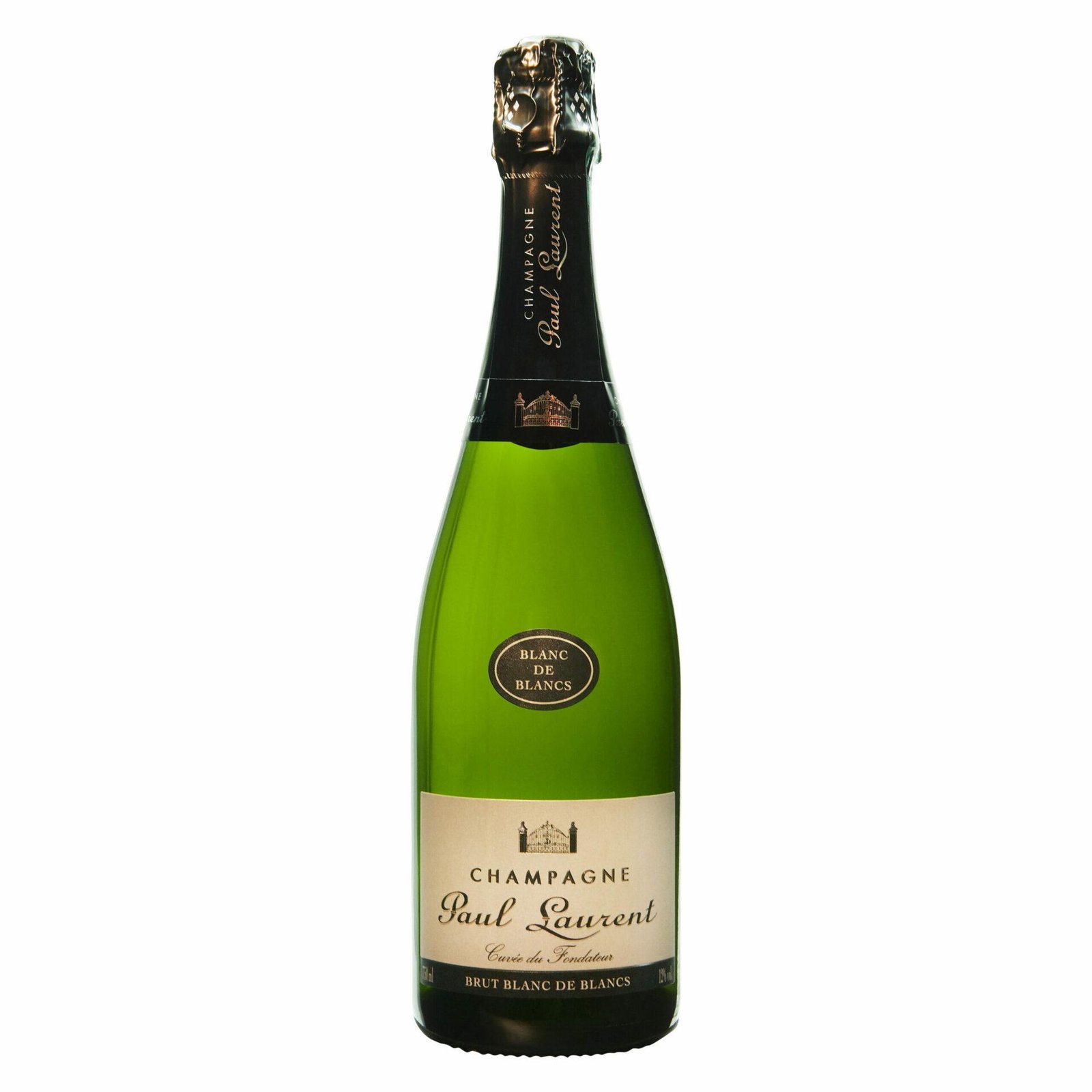
Of all the styles you will find on a champagne list, Blanc de Blancs is one of the easiest to recognise and one of the most rewarding to understand. The name literally means “white from whites”: a champagne made exclusively from white grapes. In practice, that almost always means Chardonnay. This guide explains what the term means on a label, how the style is made, what it tastes like and how to enjoy it at its best.
What does “Blanc de Blancs” mean?
Most champagnes are blends of white and black grapes. The three main varieties grown in the Champagne appellation are Chardonnay (a white grape) and Pinot Noir and Pinot Meunier (two black grapes with clear juice). A classic Brut usually combines two or all three of them to balance freshness, body and fruit.
A Blanc de Blancs leaves the black grapes out entirely. The regulations of the Champagne appellation also allow a handful of rare white varieties, such as Arbane, Petit Meslier, Pinot Blanc and Pinot Gris, but they are planted in tiny quantities. When you see “Blanc de Blancs” on a bottle of champagne, you can safely assume it is a 100% Chardonnay wine.
The opposite style is Blanc de Noirs, a white champagne made only from black grapes (Pinot Noir and/or Pinot Meunier). The juice of these grapes is colourless, so with gentle pressing the wine stays pale even though the skins are dark.
How does Blanc de Blancs taste?
Because it relies on a single grape, Blanc de Blancs shows the character of Chardonnay very clearly. Typical descriptors include:
- Freshness and tension: Chardonnay keeps a lively acidity, which gives the wine its precise, mouth-watering finish.
- Citrus and white fruit: lemon, grapefruit zest, green apple and white peach are common in younger wines.
- Floral and mineral notes: white flowers, chalk and a saline touch, especially on chalky soils.
- Toasty, creamy complexity with age: time on the lees adds brioche, almond, hazelnut and a creamy texture to the bubbles.
Compared with a Pinot-dominated champagne, a Blanc de Blancs generally feels lighter on its feet and more linear, while a Pinot Noir-led blend tends to show more red-fruit aromas and a rounder body. Neither is better; they simply suit different moments and dishes.
How is Blanc de Blancs champagne made?
The method is the same traditional method used for all champagne. The difference lies in the grapes chosen at the blending stage.
1. Harvest and pressing
Chardonnay grapes are picked by hand, as required in Champagne, and pressed gently to obtain clear, delicate juice.
2. First fermentation and blending
The juice ferments into a still, dry base wine. The cellar master then assembles base wines, sometimes from different plots and different years, to build a consistent house style. For a Blanc de Blancs, every component is Chardonnay.
3. Second fermentation in the bottle
The blend is bottled with a small amount of sugar and yeast. A second fermentation takes place inside the closed bottle, creating the bubbles. The dead yeast cells, called lees, stay in contact with the wine.
4. Ageing on the lees
This is where much of the style is shaped. Champagne rules require at least 15 months of ageing in the cellar for non-vintage wines, with at least 12 of those months on the lees. Many houses go further. Our own Cuvée Blanc de Blancs is first kept in stainless steel tanks, then rests for a minimum of 15 months on its lees, with 18 to 24 months of ageing on average.
5. Disgorging and dosage
Finally, the lees are removed, a small “dosage” of wine and sugar may be added to fine-tune the balance, and the bottle receives its cork and wire cage. You can read more about this final step in our guide to champagne sweetness levels.
For a step-by-step look at the whole process, see how champagne is made.
Why terroir matters for Chardonnay
Chardonnay is often described as a transparent grape: it reflects the place where it grows. Chalky soils retain moisture and reflect light, and they are associated with the fine minerality that many people look for in Blanc de Blancs. Champagne Paul Laurent is based in Bethon, in the Côte de Sézanne, south of Épernay. Our vineyards are known for their chalky terroir, which gives our Blanc de Blancs its mineral and creamy notes. If you would like to discover the area, our article on the Côte de Sézanne terroir goes into more detail.
What food goes with Blanc de Blancs?
The acidity and finesse of Blanc de Blancs make it a natural partner for delicate, saline and lightly creamy dishes. Good matches include:
- Oysters, scallops, langoustines and other shellfish
- Sushi and sashimi, ceviche and other raw fish preparations
- Grilled white fish with a beurre blanc or lemon butter
- Goat’s cheese, young Comté and soft cheeses with a bloomy rind
- Gougères, salted almonds and simple aperitif snacks
Avoid very sweet desserts, which make any dry champagne taste sharp. For more ideas across the whole range, see our champagne food pairing guide.
How to serve Blanc de Blancs
A few simple rules help a Blanc de Blancs show its best:
- Temperature: serve it chilled but not ice-cold, around 8 to 10 °C. Too cold, and the aromas close up.
- Glass: a tulip-shaped glass or a white-wine glass lets the aromas develop better than a very narrow flute.
- Timing: open the bottle just before serving and pour gently, tilting the glass, to keep the bubbles fine.
Our dedicated article on how to serve champagne covers chilling times, glassware and pouring in more detail.
Blanc de Blancs or a classic Brut: which should you choose?
Choose a Blanc de Blancs when you want elegance, freshness and precision: as an aperitif, with seafood, or when you want a champagne that feels bright and refined. Choose a Pinot-led Brut such as our Cuvée du Fondateur Brut (75% Pinot Noir, 20% Chardonnay, 5% Pinot Meunier) when you want more red-fruit generosity and body, for example with poultry or a broader menu. If you like the freshness of Chardonnay but want a little more depth, a blend in which Chardonnay leads, such as Cuvée Prestige Brut (70% Chardonnay, 30% Pinot Noir), sits nicely between the two.
Frequently asked questions
Is Blanc de Blancs always champagne?
No. The term is also used for other sparkling wines and even still wines made from white grapes. Only a wine produced in the Champagne appellation, under its rules, can be called champagne.
Is Blanc de Blancs sweeter or drier than Brut?
“Blanc de Blancs” describes the grapes, not the sweetness. Most Blanc de Blancs champagnes are labelled Brut or Extra Brut, so they are dry. The sweetness level is shown separately on the label.
Can Blanc de Blancs age?
Yes. Well-made Blanc de Blancs can develop beautifully, gaining notes of toast, honey and dried fruit. Most non-vintage bottles, however, are ready to drink when released and are best enjoyed within a few years. See how to store champagne for practical tips.
Discover our Cuvée Blanc de Blancs. A 100% Chardonnay champagne from Bethon, balancing elegance and vivacity with a creamy texture and a long mineral finish. See the cuvée or contact us to order.
Conclusion
Blanc de Blancs is champagne in its most luminous form: one grape, a clear sense of place and a style built on freshness and finesse. Once you know what the term means, it becomes easy to choose the right bottle for the moment, whether that is an aperitif with friends, a seafood dinner or a quiet glass to appreciate the character of Chardonnay. Please enjoy champagne responsibly.
Related articles
Chardonnay, Pinot Noir and Pinot Meunier: The Grapes of Champagne
The three champagne grapes explained: what Chardonnay, Pinot Noir and Pinot Meunier bring to a blend, the rare varieties and how to read a cuvée’s blend.
Champagne Food Pairing: Which Cuvée Goes With Which Dish?
Which food goes with champagne? Pairing ideas for Brut, Blanc de Blancs, rosé, Brut Nature and aged champagnes, from aperitif and seafood to cheese and dessert.
The Côte de Sézanne: Discovering Champagne’s Southern Terroir
Discover the Côte de Sézanne, the southern Champagne area around Sézanne and Bethon: its soils, its Chardonnay, the style of its wines and what to see nearby.